
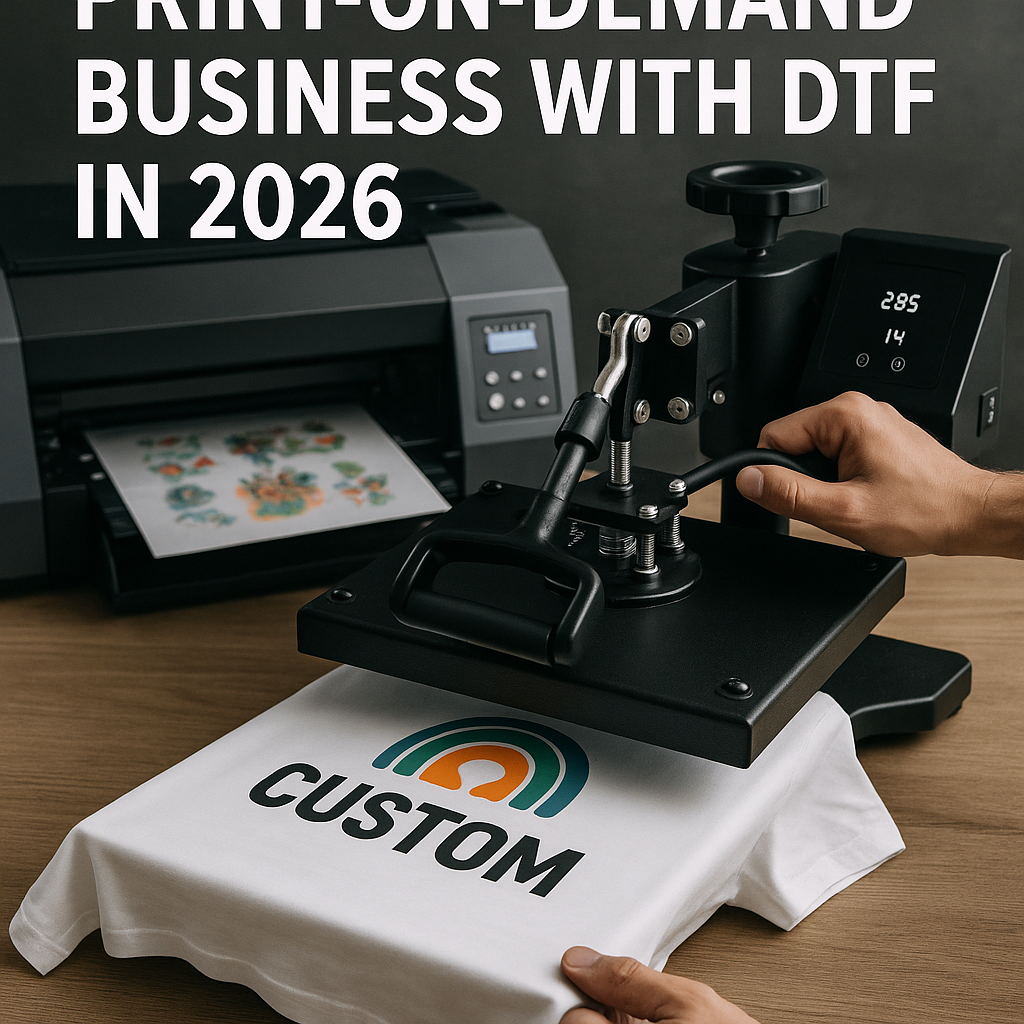
- Versatile Printing Technology: Direct to Film (DTF) uses PET film and adhesive powder to create durable, high-detail transfers that bond to various fabrics (cotton, polyester, nylon) without the pre-treatment required by DTG.
- Scalable Business Models: Entrepreneurs can launch Direct-to-Consumer (DTC) brands or B2B dropshipping services by integrating Shopify, Etsy, or TikTok Shop with automated fulfillment software like Order Desk and ShipStation.
- Essential Setup: Success requires a commercial dual-head DTF printer, curing oven, and heat press, supported by high-resolution (300 DPI) designs sourced from professional repositories like DesignsPacks.com.
- Operational Efficiency: Streamline production by automating shipping label generation and maintaining strict quality control to minimize returns in a custom-print environment.
Table of Contents
- What is Direct to Film Printing?
- The DTF Dropshipping Business Model
- Essential Technology and Software Infrastructure
- Where to Sell: Etsy, Shopify, and TikTok Shop
- Frequently Asked Questions
- Essential Equipment and Initial Setup
- Sourcing High-Conversion Designs
- Frequently Asked Questions
- Frequently Asked Questions
- Frequently Asked Questions
What is Direct to Film Printing?
Building on the basic workflow, DTF printing is no longer just an option for custom apparel, utilizes digital designs printed onto a specialized PET carrier film using pigment-based textile inks. Unlike Direct-to-Garment (DTG) methods, which require chemical pre-treatment of the fabric, DTF relies on a mechanical bond created by a thermoplastic adhesive.
- Apply hot-melt adhesive powder to the wet ink layer immediately after printing.
- Cure the film in an oven or under a flash dryer to liquefy and bond the powder.
- Heat press the transfer onto cotton, polyester, or blended blanks, such as Bella + Canvas shirts, using specific pressure and temperature settings.
The DTF Dropshipping Business Model
Once you have mastered the printing process, you can scale operations by transitioning to a B2B white-label production model. This DTF dropshipping framework maximizes equipment utilization by fulfilling orders for other brands, allowing you to generate revenue without managing a consumer-facing storefront.
Essential Technology and Software Infrastructure
To support a high-volume B2B or B2C model, you must optimize print-on-demand fulfillment by integrating your Shopify or Etsy storefront via API. Use Order Desk to centralize logistics data from multiple sales channels into a single dashboard.
- Connect your store to ShipStation or Shippo to automate rate shopping and carrier selection.
- Configure ROLLO or DYMO 4XL hardware for high-volume thermal label printing.
- Automate the order workflow to reduce latency, ensuring that as soon as a print is cured, the shipping label is generated and the customer is notified.
Where to Sell: Etsy, Shopify, and TikTok Shop
- Shopify: Act as your primary command center. This platform offers total brand control and allows you to build a dedicated customer list, which is essential for long-term retention and higher profit margins.
- Etsy: Utilize this marketplace to tap into existing traffic for niche, personalized, or vintage-inspired apparel. Etsy’s algorithm favors the unique "hand-made" quality that localized DTF printing provides over mass-produced alternatives.
- TikTok Shop: Capitalize on impulse purchases and influencer collaborations. The high-speed nature of TikTok trends aligns perfectly with DTF’s ability to produce one-off designs without the setup costs of traditional methods.
Frequently Asked Questions
Is DTF better than screen printing?
DTF is superior for low-volume, high-detail, and multi-color jobs because it eliminates the need for expensive screens and color separation. However, screen printing remains more cost-effective for bulk orders of 50+ units with limited color palettes.
Essential Equipment and Initial Setup
To execute the business models mentioned above, your facility must be anchored by a reliable hardware stack. The technical requirements for a professional-grade DTF environment include:- Commercial DTF Printer: Invest in a dual-head system capable of handling CMYK+W Inks. This setup allows for the simultaneous printing of color and the white underbase, significantly increasing output speed.
- Consumables: Ensure you are using high-quality PET Film with a "cold peel" or "hot peel" coating that matches your specific production timeline.
- Curing and Finishing: Use an automated Adhesive Powder Shaker and Curing Oven to ensure the TPU powder is evenly melted. This step is vital for the wash-fastness and elasticity of the final garment.
- Final Application: Deploy a High-Pressure Pneumatic Heat Press. Consistent pressure and calibrated temperature control are the final variables in ensuring the transfer bonds permanently with the fabric fibers.
Sourcing High-Conversion Designs
With your hardware and infrastructure established, the focus shifts to high-quality artwork, the primary driver of merchandise revenue. To scale rapidly without the overhead of a dedicated creative agency, utilize professional design bundles that offer pre-vetted aesthetic appeal and technical compatibility.
- Navigate to DesignsPacks.com to browse curated collections.
- Select
PNGassets with transparent backgrounds or high-resolutionJPGfiles for full-bleed sublimation wraps. - Download commercial-ready files to bypass the manual graphic creation phase, ensuring all assets meet the 300 DPI threshold required for crisp DTF output.
Frequently Asked Questions
How do I choose between a desktop and wide-format setup? A 12-inch desktop DTF printer is the ideal entry point for small-batch production, allowing you to scale without the financial risk of unsold inventory. As demand grows, these units can run in parallel to increase throughput.
Why is DTF preferred over other methods? DTF offers superior fabric versatility, adhering to cotton, polyester, and nylon with equal durability, a feat Sublimation and DTG cannot consistently achieve. To maintain profitability, focus your sales strategy on high-traffic social commerce platforms like TikTok Shop, where visual demonstrations of the peel process often drive viral engagement. Finally, protect your margins by establishing a strict return policy that limits replacements to verified manufacturing defects or shipping damage.
Frequently Asked Questions
Navigating the technical hurdles of high-volume production often leads to specific operational queries. Below are the essential hardware and software benchmarks for maintaining a competitive edge:
- Hardware Selection: Prioritize commercial-grade dual-head systems over converted desktop models to ensure 24/7 duty cycles and modular repairability.
- Asset Acquisition: Streamline your design offerings by sourcing production-ready, high-resolution assets from specialized repositories like DesignsPacks.com.
- Logistics Integration: Generate shipping labels via ShipStation paired with a ROLLO thermal printer to handle high-velocity outbound mail without ink costs.
- Platform Management: Utilize Shopify as your central command hub to manage production margins and track real-time inventory of consumables like TPU powder and PET film.
Frequently Asked Questions
DTF vs. DTG Operations
The primary technical distinction lies in the substrate interaction: DTF transfers a cured film-printed graphic via heat press, whereas DTG applies aqueous ink directly into the fabric. This makes DTF the superior choice for high-performance polyester blends and dark nylon, materials that typically suffer from dye migration in DTG processes.
What are the critical startup requirements?
- Infrastructure: Install a high-quality air filtration system with HEPA and charcoal filters to manage the fumes generated during the powder curing stage.
- Asset Management: Beyond sourcing from DesignsPacks.com, implement a cloud-based DAM (Digital Asset Management) system to categorize client files and internal designs for rapid retrieval.
- Financial Integration: Connect Shopify via API to your accounting software to monitor real-time margins, accounting for the fluctuating costs of PET film and white ink consumption.
